Fishing Cape Coral’s Canals
Cape Coral is the most-asked beginner question in Southwest Florida fishing: there’s water behind half the houses in town, and almost none of it is public. Here’s how the system actually works, what’s in it, and where you can legally cast a line without a boat. Figures below were checked against city, state park, and county sources on August 3, 2026. Where a number couldn’t be pinned to a source, we said so instead of guessing.
How does Cape Coral’s canal system work?
More than 400 miles of canals, split into two systems that never touch: saltwater and freshwater.
Saltwater canals connect directly to the Caloosahatchee River and, beyond it, the Gulf of Mexico. They’re tidal, water level and current shift through the day, and boats can run them out to open water. Freshwater canals are landlocked: no tide, no Gulf access, filled by rain and groundwater instead of the river. A canal can look identical from the dock either way, and which kind you’re on decides both what you’ll catch and which license covers you.
We couldn’t confirm a single authoritative city source giving an exact mile-by-mile saltwater/freshwater split. Multiple independent sources agree the canals run roughly half saltwater and half freshwater, so that’s the figure we’re standing behind rather than the precise numbers you’ll see floating around (222/156 miles, for instance) that we couldn’t verify against an official source.
What lives in Cape Coral’s canals?
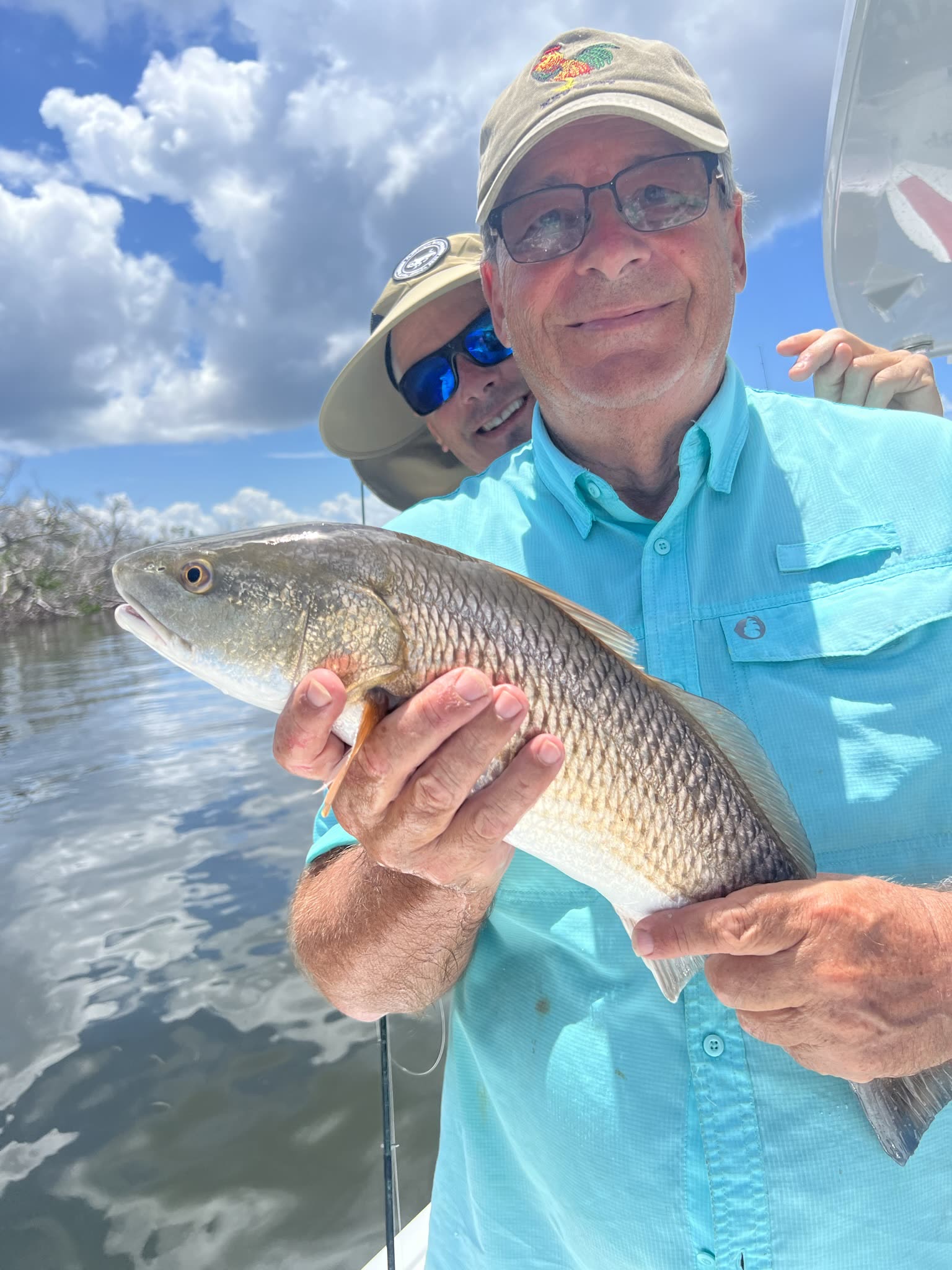
Snook, redfish, tarpon, jack crevalle, mangrove snapper, and sheepshead on the salt side. Largemouth bass and non-native cichlids, oscars, Mayan cichlids, and similar species long established here, on the fresh side.
Snook and tarpon sit tight to structure, dock pilings, culverts, seawall corners, rather than cruising open water. Sheepshead stack up on barnacle-covered pilings, especially in the cooler months. Bass and cichlids on the freshwater side hold near the same kind of cover: dock shade lines, culvert mouths, any break in an otherwise featureless seawall.
Where should you fish a Cape Coral canal?
Fish structure, not open water. Dock pilings, seawall corners, culverts, bridge shadows, and the drop-off where a smaller canal meets a wider one.
Docks and pilings hold fish because they hold bait and break current. Drop-offs concentrate fish looking for an ambush point, often at a spreader-canal junction or where a side canal meets a main one. Spreader canals, the shallow dead-end residential canals branching off the main saltwater canals, fish differently at different tide stages. Moving water pulls bait past the mouth of the spreader, and that’s frequently the better spot than fishing deep inside it.
What bait and tackle do locals actually use?
Live shrimp, first and last. It’s the default bait for both salt and fresh canals and catches nearly everything. Throwing artificials instead? A bucktail jig worked slowly along seawalls and pilings is the long-standing local pick for snook and redfish.
Light spinning tackle (10–20 lb line) covers most canal fishing here. You’re rarely casting far, and the fight is usually a snook or redfish trying to reach the nearest dock piling, not open water. Locals fishing the saltwater canals lean on shrimp under a popping cork or free-lined, plus bucktail and soft-plastic jigs for structure. Small soft plastics and live shiners take bass and cichlids on the freshwater side, around the same kind of cover.
Tides and seasons
Saltwater canals fish on the tide. Moving water, incoming or outgoing, turns fish on. Freshwater canals don’t tide at all, so time of day and water temperature matter more than the clock.
In the saltwater canals, target the two hours around a tide change, when current moves fastest and pushes bait past ambush points. Snook and tarpon fishing picks up through the warmer months; sheepshead fishing is best in the cooler months when they stack on pilings. Freshwater fishing for bass and cichlids runs best early and late in the day, especially once summer heat sets in.
Do you need a fishing license?
Yes. Any Cape Coral canal, saltwater or freshwater, needs one, and the two licenses don’t substitute for each other.
Fish a saltwater canal with only a freshwater license, or the reverse, and you’re not covered. See our Southwest Florida fishing license guide for exemptions, prices, and how to tell which canal you’re on.
Access etiquette: private docks vs. public access
Most Cape Coral canal frontage is private residential property. Don’t fish from someone’s dock or seawall without permission. Use a public park, public boat ramp, or bridge right-of-way instead.
- Rosen Park
- Public shoreline access and boat ramp on the Chantry Canal (saltwater), which connects to the Caloosahatchee River and the Gulf.
- Horton Park
- Public shoreline fishing and boat ramp on the Everest Canal (saltwater), connecting to the Caloosahatchee just south of the mid-point bridge.
- Bridge rights-of-way
- Sidewalks over canal bridges are generally fishable public space; don’t block traffic or park illegally to reach them.
- Private docks and seawalls
- Off-limits without the owner’s permission, even if the dock looks unused. Cape Coral is almost entirely private residential canal frontage. This is the rule, not the exception.
Frequently asked questions
Do I need a fishing license to fish Cape Coral’s canals?
Yes, and pay attention to which one. Saltwater canals need the saltwater license, freshwater canals need the freshwater license, and they don’t swap. Problem is, a canal can look identical from the dock whether it’s salt or fresh. A few exemptions apply, under 16, some seniors, certain licensed piers, but don’t assume one covers you without checking myfwc.com/license.
How many miles of canals does Cape Coral have?
More than 400 miles, by most reporting. Split roughly evenly between saltwater canals with tidal Gulf access through the Caloosahatchee and landlocked freshwater ones. No single city source gave us an exact mile-by-mile count, so treat the precise numbers floating around online with some skepticism. Half and half is the number we’d stand behind.
Are Cape Coral canals saltwater or freshwater?
Both. Two entirely separate systems. One connects to the Caloosahatchee and the Gulf and moves with the tide. The other is cut off, filled by rain and groundwater, and never tides at all.
What fish can you catch in Cape Coral canals?
Depends which side you’re fishing. Snook, redfish, tarpon, jack crevalle, mangrove snapper, and sheepshead on the salt side. Largemouth bass and a handful of exotic cichlids, oscars, Mayan cichlids and their cousins, on the fresh side, all of them well established here by now.
Can I fish from a dock in Cape Coral, or do I need a boat?
No boat needed. Most of this fishing already happens from docks, seawalls, and bridges rather than open water, simply because most of Cape Coral is residential canal frontage. The real obstacle is ownership, not equipment: almost all of that frontage is private. Stick to a public park, a public boat ramp, or a bridge right-of-way. Not a stranger’s dock.
Where can the public access Cape Coral canals for free?
Rosen Park, on the Chantry Canal, and Horton Park, on the Everest Canal, both saltwater, both with a boat ramp and public shoreline you can actually fish from. Bridge sidewalks over canals generally work too. An empty-looking dock is still somebody’s dock.
What bait works best in Cape Coral’s canals?
Live shrimp, first and always. It works in both the salt and fresh canals and catches nearly anything that swims. If you’re throwing artificials instead, a bucktail jig worked slow along a seawall or drop-off has been the local snook-and-redfish standby for years.